


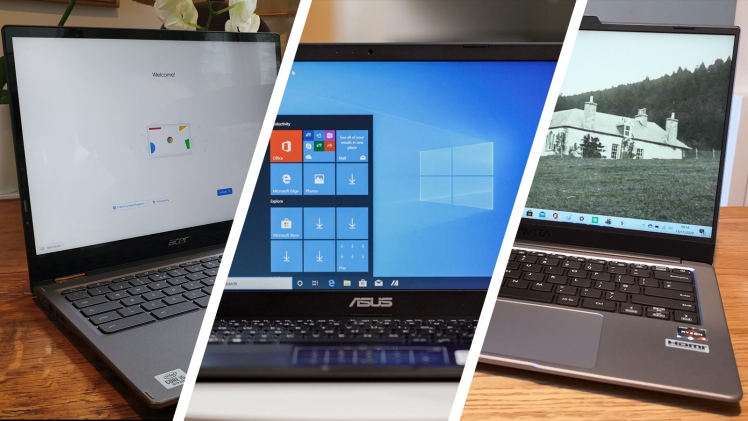
In the realm of portable computing, the term “notebook” often emerges alongside “laptop,” causing some confusion. While both terms refer to portable computers, they are not entirely interchangeable. Notebooks represent a specific category within the broader laptop ecosystem, characterized by certain features, designs, and usage scenarios. In this article, we will delve into the world of notebooks within laptops, exploring their unique characteristics, advantages, and popular models.
Table of Contents:
1.1. Understanding the Terminology
1.2. The Distinctive Traits of Notebooks
Key Features of Notebooks
2.1. Portability and Compactness
2.2. Lightweight Design
2.3. Battery Life and Efficiency
2.4. Balanced Performance
2.5. Ergonomics and User-Friendly Design
Use Cases and Target Audience
3.1. Notebooks for Students
3.2. Notebooks for Business Professionals
3.3. Notebooks for Travelers
3.4. Notebooks for Casual Users
Popular Notebook Models
4.1. Dell XPS 13
4.2. MacBook Air
4.3. HP Spectre x360
4.4. Lenovo ThinkPad X1 Carbon
4.5. Microsoft Surface Laptop
Future Trends in Notebooks
5.1. Advancements in Display Technology
5.2. Sustainable and Eco-Friendly Notebooks
5.3. Integration of Emerging Technologies
1. Defining Notebooks in Laptops
1.1. Understanding the Terminology
The terms “laptop” and “notebook” are often used interchangeably, and their meanings can vary depending on location and context. However, it’s crucial to recognize that “notebook” represents a specific subcategory of laptops, distinguished by its design and intended usage.
1.2. The Distinctive Traits of Notebooks
Notebooks are characterized by several key attributes that set them apart within the laptop spectrum:
Compactness: Notebooks prioritize compactness and portability, often featuring smaller form factors compared to traditional laptops.
Lightweight: They are designed to be lightweight, making them highly portable and ideal for users on the move.
Efficiency: Notebooks often emphasize energy efficiency, resulting in longer battery life and reduced heat generation.
Balanced Performance: While they may not offer the highest performance levels, notebooks provide a balance between performance and portability, suitable for everyday tasks.
User-Friendly Design: Notebooks are known for their user-friendly design, often incorporating ergonomic features and comfortable keyboards.
2. Key Features of Notebooks
Notebooks excel in portability and compactness, making them ideal for users who prioritize mobility. They are designed to be easily carried in backpacks, briefcases, or even handbags, allowing users to work or study from different locations.
2.2. Lightweight Design
Complementing their portability, notebooks are lightweight. This characteristic minimizes the burden of carrying them, making them suitable for students, business professionals, and travelers who are frequently on the move.
2.3. Battery Life and Efficiency
Notebooks are engineered with energy-efficient components and optimized power management. This results in longer battery life, enabling users to work or study without needing frequent recharges, making them convenient for extended use.
2.4. Balanced Performance
While they may not offer the top-tier performance of high-end laptops, notebooks provide sufficient performance for everyday tasks. They are well-suited for web browsing, document editing, video conferencing, and other common activities.
2.5. Ergonomics and User-Friendly Design
Notebooks often incorporate ergonomic design elements, such as comfortable keyboard layouts and well-placed trackpads. This user-friendly approach enhances the overall computing experience, especially during prolonged use.
3. Use Cases and Target Audience
Notebooks are popular choices for students due to their portability and suitability for educational tasks. They are well-suited for note-taking, research, and studying, making them essential tools in academic settings.
3.2. Notebooks for Business Professionals
Business professionals value notebooks for their efficiency and portability. Notebooks are convenient for presentations, emails, and meetings, allowing professionals to remain productive while on the move.
3.3. Notebooks for Travelers
Travelers often prefer notebooks for their lightweight design and extended battery life. Whether working during flights or staying connected while exploring new destinations, notebooks cater to the needs of globetrotters.
3.4. Notebooks for Casual Users
Casual users, including those who primarily engage in web browsing, email, social media, and media consumption, find notebooks to be efficient and practical devices for everyday computing tasks.
4. Popular Notebook Models
Let’s explore some popular notebook models that exemplify the attributes and advantages of notebooks:
Portability: The Dell XPS 13 is known for its slim and lightweight design, making it highly portable for professionals and students.
Performance: It offers a balance between performance and portability, catering to a wide range of users.
Battery Life: The XPS 13 provides impressive battery life, ensuring uninterrupted productivity during long work or study sessions.
Iconic Design: The MacBook Air is celebrated for its iconic design, including a slim profile and lightweight build.
Efficiency: It boasts energy-efficient hardware and an optimized operating system, resulting in extended battery life.
Ergonomics: The MacBook Air features a comfortable keyboard and a high-resolution Retina display.
Versatility: The HP Spectre x360 is a 2-in-1 convertible notebook, offering the flexibility of both a laptop and a tablet.
